MDN Digital
How to Create a Professional Website: Complete Guide
How to create a professional website: check out this complete guide with step-by-step instructions, tools, design tips, hosting, and performance.
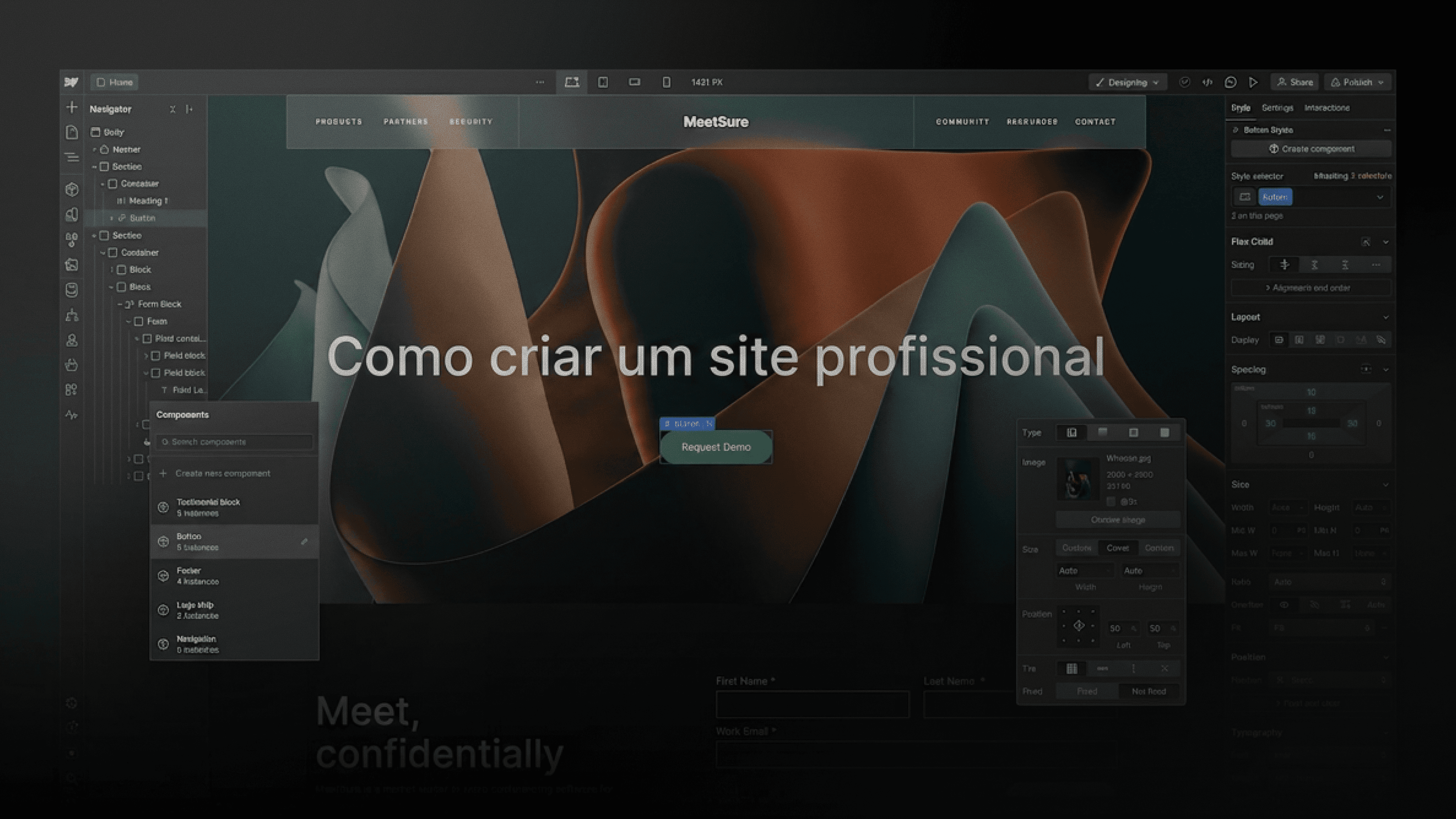
How To Create A Professional Website: Step By Step
Want to know how to create a professional website? Today, having an online presence is essential for companies, freelancers, and even personal projects that want to grow and reach more clients.
A well-structured website strengthens your brand's credibility, besides serving as a strategic channel to attract visitors, generate leads, and increase your sales.
Read our article and check out a step-by-step guide on how to create a successful professional website!
What Are The Types Of Professional Website Development?
When it comes to creating a professional website, you can count on different types of development, which are the following:
Institutional: suitable for businesses that want to present their services, history, and differentiators, strengthening the brand's image in the digital environment.
Online store: complete platform for online sales, with integration of payment methods, product control, and order management.
Blog: used for content production, aiming to attract visitors, build authority, and improve search engine ranking.
Headless: a more advanced format that separates the visual part from the management system, ensuring better performance, flexibility, and security in development.
What Are the Professional Techniques For A WordPress Website?
In the process of how to create a professional website, it is essential to apply more advanced development and optimization practices that go beyond the basics:
Full Site Editing (FSE): enables developing entire pages with dynamic blocks, making the process faster and more flexible.
Performance optimization (Core Web Vitals): technical adjustments to improve stability, speed, and user experience.
Bespoke development: use of technologies like HTML and CSS to create exclusive features, going beyond the limitations of pre-made templates, delivering personalized solutions.
How To Create A Professional Website? 13 Steps
Check out below a step-by-step guide on how to create a professional website:
Choose the Website Domain
The domain is the name by which your website will be found on the internet, serving as your brand's digital identity. Therefore, it is important to choose something simple, easy to remember, and aligned with your business.
For those who already have a company, the ideal is to keep the same name to reinforce recognition. If the current domain no longer makes sense, consider a strategic update that matches the brand's current moment.
Create A Professional Email
When creating a website, communication must also evolve. A corporate email conveys more credibility and professionalism in any interaction with clients or partners.
Generic addresses can give a less structured image, while an email with your own domain strengthens trust and reinforces your brand's presence in the digital environment.
Hire A Hosting Service
Hosting is the environment where all your website's files are stored, ensuring that it is available on the internet for anyone to access.
Therefore, choosing a good service is essential to keep the website fast, stable, and secure, even when dealing with different content formats, such as heavy images, videos, and more complex pages.
Invest In the Security Of Your Website
An important care in the process of how to create a professional website, ensuring the security of your platform is indispensable to avoid technical losses and damage to your brand's reputation.
With the constant increase in cyber attacks, any vulnerability can be exploited by attackers.
Therefore, adopting good security practices must be part of the website construction from the beginning, such as firewall, security tools, and CDN (Content Delivery Network), besides constantly making updates.
Choose the Platform To Create Your Website
In the process of how to create a professional website, the tool used to build and manage your website directly impacts its evolution in the future. Opting only for ease can limit growth and generate rework later on.
Therefore, the ideal is to choose a platform that delivers flexibility, possibility of personalization, and autonomy. More robust solutions allow for creating simple pages and more complex projects, keeping up with the growth of the business.
Define the Most Appropriate CMS
The CMS is the system that organizes and allows the management of all content on the website. With it, you can update pages, publish articles, and manage information without needing to program.
Choosing an intuitive and scalable CMS ensures more efficiency in website administration over time.
Prioritize Speed and Performance
A slow website compromises the user experience and can directly impact your results. Today, fast loading and response to interactions are essential factors for Google and for the user.
Therefore, optimizing codes, images, and resources is important to obtain fluid navigation and increase the chances of conversion.
Choose A Professional And Responsive Layout
The look of the website needs to be aesthetically appealing, functional, and adapted to all devices, especially mobile phones.
A good template takes mobile navigation into account from the start, ensuring that texts, images, and buttons work perfectly on any screen without compromising the user experience.
Organize Content Design
The way content is presented directly interferes with reading and comprehension of the message. Colors, fonts, and spacing must be chosen to facilitate navigation.
Structuring texts well, with clear headings and short paragraphs, allows the user to quickly find what they are looking for, in addition to increasing the time spent on the site.
Produce Strategic Content
In the process of how to create a professional website, it is not enough to just publish information; you must create relevant content, with visual and textual quality, that really interests the audience.
In addition to engaging visitors, good content helps in ranking on search engines like Google and strengthens the brand's authority.
Use Essential Plugins
Plugins are features that expand the website's functionalities, allowing the insertion of new tools without the need for complex development.
Among the main ones are those aimed at SEO, data analysis, performance, and, when necessary, online sales.
Invest In SEO
For your website to be found on Google, it is necessary to apply optimization techniques, which involve everything from the structure of the pages to the choice of keywords.
A good SEO job increases visibility, attracts qualified visitors, and maximizes your website's results.
13. Integrate With Social Media
Connecting the website to social media facilitates the user's access to other brand channels, creating a more complete experience.
With well-positioned links, visitors can easily transition between platforms, increasing engagement and strengthening digital presence.
Conclusion
Now that you already know how to create a professional website, discover MDN Digital, which stands out for creating professional websites designed for performance, SEO, and business generation.
With customized solutions and a focus on growth, MDN Digital delivers projects that go beyond the visual, helping your company attract customers and sell more.


