Design
2D Animation vs. Motion Design: which to choose for each type of video?
If you've ever been in a meeting where someone said "we need an animated video" without being able to explain exactly what they wanted, you are not alone.

If you've ever been in a meeting where someone said "we need an animated video" without being able to explain exactly what they wanted, you're not alone. The confusion between 2D animation and motion design is common in the market, and it goes beyond terminology. It directly impacts the budget, deadline, and, above all, the results of the project.
In this article, you will understand what differentiates the two formats, in which contexts each works best, and how to make this decision based on business objectives, not creative guesswork.
What is 2D animation and when does it make sense
2D animation is the format most people imagine when they think of an "animated video": characters, drawn backgrounds, and a visual narrative with a beginning, middle, and end. It is the classic cartoon format that has found a relevant space in marketing, especially for explaining products and services in a light and accessible way.
Key characteristics of 2D animation
2D animation works with flat characters and backgrounds, built in layers. The result is a smoother look with an illustrative character, which favors longer and more emotional narratives. The process involves a script, storyboard, character design, animation, and finalization with sound. Because it is a format with a lot of artistic work involved, 2D animation tends to be more labor-intensive and, consequently, more expensive when done with quality. It also has a longer production timeline, which is a significant factor in projects with tight timings.
When 2D animation is the right choice
2D animation works very well when:
The product or service needs to be humanized, characters create empathy and closeness
The narrative is longer and requires an emotional connection with the audience
The content is aimed at broad audiences, especially B2C
The goal is to tell a story, not just present a product
The budget and deadline allow for a more elaborate process
What is motion design and why it goes beyond animation
Motion design is design in motion. Instead of characters and stories, it works with graphic elements, typography, icons, shapes, and visual compositions animated with rhythm and intentionality. The goal is to communicate information with clarity, impact, and speed, without relying on a linear narrative.
Motion design emerged in television and cinema (intros, openings, movie titles) and migrated to digital marketing as one of the most efficient tools for communicating in environments where attention is scarce and time is short.
Motion design as a strategic tool
What differentiates motion design from other visual formats is not just the aesthetics; it is the strategic function. Good motion design doesn't just "look pretty": it guides the user's gaze, anticipates the next piece of information, creates a visual hierarchy, and leads the user to an action.
This is why motion design works so well in contexts where decision-making needs to be fast: ads, product onboarding, feature demonstrations, and data presentations.
When motion design is the right choice
Motion design stands out when:
The message needs to be conveyed in just a few seconds
The product or service is complex and needs to be visually simplified
The context is digital: feeds, stories, ads, landing pages, interfaces
The content will be run on paid media (where every second has a cost)
The goal is to show how something works, rather than telling a story with a narrative
The brand needs visual consistency across multiple formats and sizes
2D animation vs. motion design: a direct comparison
Criterion | 2D Animation | Motion Design |
|---|---|---|
Ideal duration | 60s to 3min | 15s to 90s |
Style | Narrative, emotional | Informative, direct |
Relative cost | Higher | Variable |
Best channel | YouTube, landing page | Ads, stories, UI, social, Websites and landing pages |
Ideal for | B2C, culture, cause | B2B, SaaS, product, tech |
By business objective
If the goal is awareness and emotional connection: 2D animation creates more empathy. Well-crafted characters are remembered. Brands that need to build a relationship with a broad audience benefit from this format.
If the goal is to explain, convert, or demonstrate: motion design delivers better results. It is more efficient at reducing friction, simplifying concepts, and driving concrete action.
By content type and channel
2D animation works better for:
Corporate videos with characters and narrative
Educational content and long-term storytelling
Social causes and human-impact communication
Motion design works better for:
Product and feature demonstrations
Paid media ads (Meta, Google, LinkedIn, YouTube)
Onboarding and interface tutorials
Data presentations and animated reports
Content for LinkedIn, Instagram, and YouTube Shorts
By budget and deadline
2D animation with professional quality is rarely quick, as the artistic process requires time and iteration. If the project has a tight deadline or needs variations (different sizes, English versions, campaign adaptations), motion design is generally more agile and scalable.
Which format to choose for technology and SaaS companies?
For most technology companies, digital products, and SaaS, motion design is the most efficient format. Not because it is "more modern," but because it solves the most frequent problems in this segment: explaining what the product does, clearly, quickly, and convincingly, to an audience with no time to waste.
To explain a product or feature
SaaS products are inherently abstract. When the user cannot visualize the product in use, conversion drops. Motion design allows you to literally show how the product works, without needing a recorded demo or a real user on screen. Workflows, automations, integrations: everything can be translated into an accessible visual language.
For performance campaigns
In paid media, the first 3 seconds decide everything. Motion design allows you to create those 3 seconds with precision: visual hook, key information, and call to action. Because 2D animation works with a slower pace and longer narrative, it rarely performs well in short formats.
For corporate presence and branding
A technology company that needs to communicate authority, innovation, and sophistication finds an ally in motion design for branding in motion. Brand films, pitch videos, animated presentations, all benefit from the visual rigor that motion design offers.
Want to understand which format makes the most sense for your next project? Learn how MDN Digital develops motion design projects for technology, SaaS, and digital marketing companies: mdndigital.co/solucoes/motion-design
Motion design in practice: MDN case studies
Nothing explains the difference between talking about motion design and doing motion design better than seeing the work in action. Below are two case studies developed by MDN that show how motion can transform complex communications into memorable visual experiences.
Aidkit | when motion communicates social impact and technology
Aidkit works with financial assistance programs and needed an institutional video that conveyed social impact, technological trust, and operational efficiency all at once. The challenge: communicating to two very different audiences, program beneficiaries and institutional partners, without losing clarity in either case.
The solution was to build a layered visual narrative: human and emotional elements to create connection, and product language and data to convey technical credibility. The result balances purpose and performance in communication that works both for institutional presentations and digital channels.
Channel Factory | motion at the right moment of attention
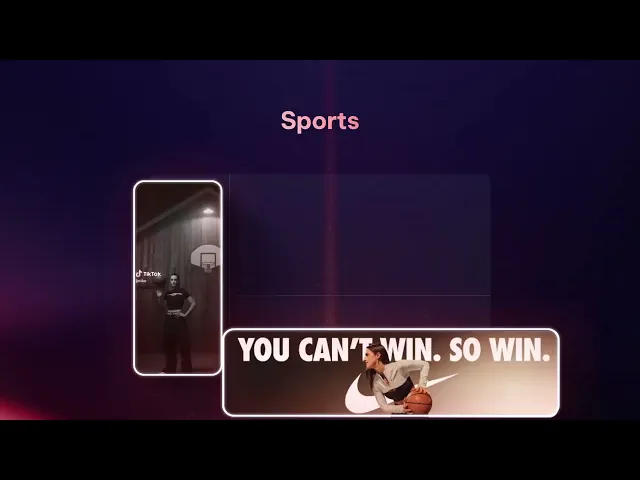
Channel Factory is a contextual intelligence platform for video advertising. For the Moments campaign, the challenge was to communicate how the technology identifies the viewer's moments of highest attention, and how brands can appear at those exact moments.
The motion design developed by MDN translates this abstract concept into a dynamic and precise visual language, demonstrating the product in action while delivering the campaign message. Two goals in a single asset.
How MDN develops motion projects for digital companies
MDN does not treat motion design as just production; it treats it as strategy. Each project begins with a discovery phase: understanding the product, the audience, the distribution channel, and the business objective. From there, the visual direction, script, and animation are built.
The process includes styleframes for visual validation before animation, structured reviews, and delivery in the formats required for each channel, from 9:16 for stories to 16:9 for YouTube, with all aspect ratio variations.
For companies that need continuous volume, multiple videos, language variations, and campaign adaptations, MDN also offers a subscription-based motion model, which guarantees recurring production with visual consistency and cost predictability.
Ready to get started? Explore MDN's motion design solutions and see how we can develop your next project with strategy, agility, and results: mdndigital.co/solucoes/motion-design